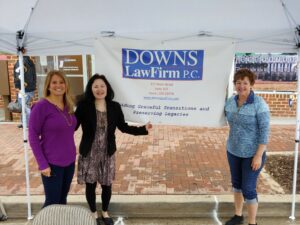
Downs Law Firm Laurel, MD

Navigating Life’s Transitions with Estate Planning

May 19, 2025 No Comments

Transitioning into a new chapter of your life, whether it’s retiring after a long and dedicated career or experiencing other significant life changes, is a momentous event that requires careful planning.

A Quiet Farewell at 30,000 Feet

I was recently on a very early morning flight from Louisville to Dulles. I was heading home after visiting my family in Southern Indiana. I wasn’t flying first class; in fact, my seat was at the very back of the plane. As I took my seat, a friendly flight attendant who noticed how tired I was kindly asked if I would like a cup of coffee before we took off. My response, of course, was a resounding yes.

As he handed me my cup, he shared with me that this flight was his last. After 42 years as a flight attendant, he was retiring. The joy radiated from his face; he was ready for this moment. He confided in me that he didn’t want the pilot or his fellow flight attendants to know about his retirement. He sought a quiet, unassuming exit from the career he had dedicated his life to, a humble transition into the next chapter of his life.

The Power of Meaningful Encounters

Throughout the flight, I couldn’t help but ponder what that last journey must have meant to him. Although we had just met, it was evident that he was dedicated to his work. Every interaction with passengers was intentional, accompanied by a warm smile. The authenticity of his service resonated with me and highlighted the significance of transitions in our lives.

In my role as an estate planning attorney, I meet people from all walks of life who are navigating their own transitions. Whether it’s a child dealing with the loss of a parent, a young couple embarking on the journey of parenthood, or someone like that retiring flight attendant, transitions are an inevitable part of our lives. They bring both excitement and uncertainty, marking moments of change that demand our attention and careful planning.

Leaving a Legacy with Grace

A well-crafted estate plan serves as a roadmap for navigating life’s transitions, providing you and your loved ones with the peace of mind that your wishes will be honored. It enables you to leave behind a legacy that reflects your values, preserves your hard-earned assets, and protects your family’s future. Moreover, estate planning empowers you to embrace the next chapter with confidence, knowing that you have laid the groundwork for a graceful transition.

So, whether you are on the brink of retirement, celebrating a new addition to your family, or facing other pivotal moments in life, remember that these transitions are not just events; they are opportunities to craft your legacy and secure a future that reflects your values. Just as the retiring flight attendant wanted to conclude his final flight with humble grace and dignity, estate planning allows you to do the same for the chapters in your life. Embrace the excitement, confront the uncertainty, and ensure that you are well-prepared for life’s journey.

couple with their home

Maryland’s Inheritance and Estate Tax Laws Unchanged in 2025

April 15, 2025 No Comments

The recently passed fiscal year 2025 budget for the State of Maryland includes a range of tax increases and policy decisions, but it appears that Maryland’s state inheritance and estate tax laws remain unchanged. Despite proposals from Governor Moore, no adjustments were made to the inheritance tax or estate tax exemption threshold. This decision carries important implications for families across the state—including those in Laurel, Columbia, and Annapolis—who are planning how to protect and transfer their wealth.Couple with their home

Inheritance Tax: No Structural or Rate Changes

Maryland is one of only five states that still imposes an inheritance tax, and it is the only state that imposes both an inheritance and an estate tax. The inheritance tax continues to apply at a 10% rate on assets left to individuals who are not close relatives.  Immediate family members—including spouses, children, parents, grandparents, and siblings—remain exempt from this tax. However, nieces, nephews, cousins, friends, and unrelated beneficiaries are still be subject to the 10% inheritance tax.  While Gov. Moore’s budget recommended finally doing away with this tax, the 2025 budget ultimately did not include a reform to bring Maryland in line the majority of states allowing inheritance to pass to any person without tax penalties.

Estate Tax Exemption Stays at $5 Million

Legislators rejected Gov. Moore’s recommendation to reduce Maryland’s estate tax exemption to $2 million, keeping it at its current level of $5 million for 2025.  Estates exceeding this amount may still be taxed at rates of up to 16%.  The proposed reduction would have brought many more families across Maryland within the scope of the estate tax, seriously complicating their estate planning.  This state-level exemption is notably lower than the current federal estate tax exemption, which is over $13 million in 2025. The federal exemption is currently scheduled to drop significantly in 2026, which will depend on federal legislation this year.  Proactive estate planning remains critical for residents in areas like Laurel, which is increasingly home to dual-income households and appreciating real estate.

What This Means for Maryland Families

Families should take note: while these tax rates haven’t changed, the burden of inheritance and estate taxes can still be significant without a well-crafted estate plan. Whether you’re passing down real estate, retirement accounts, or family businesses, planning with Maryland’s current tax environment in mind is crucial.

By taking steps now, you can ensure that your legacy reaches your loved ones as intended—without unexpected tax consequences.

Local Expertise from Downs Law Firm

At Downs Law Firm, we proudly serve families throughout Maryland, including Howard, Anne Arundel, Montgomery, and Prince George’s Counties. Our estate planning attorneys understand the unique challenges posed by Maryland’s inheritance and estate tax system and can guide you through effective strategies to reduce tax liability and protect your assets.

If you haven’t reviewed your estate plan recently—or if you’re just starting the process—now is the perfect time. Contact Downs Law Firm today to schedule a consultation and ensure your estate is fully prepared for the future.

Trust Planning for Minors

March 19, 2025 No Comments

Trust Planning for Minors

Minors are not allowed to inherit property directly. Therefore, if no estate planning has been done and property is left to a minor, more than a few problems will be created. The family must apply to a court to appoint a guardian who will be responsible for the assets until the minor becomes of legal age.

Here are just a few scenarios that may result if a minor is left property directly:

  • The court-appointed guardian may not understand the heir or the family’s dynamics, causing friction and possiblename a guardian litigation.
  • If the court-appointed guardian is a family member, there may be resentment about their control of assets and the decisions made.
  • Fees will need to be paid to the guardian, shrinking the inheritance.
  • The child will receive their entire inheritance at age 18, when few teenagers are responsible enough to manage significant assets.
  • Family Assets will be separated and divided equally in shares to the different children, ignoring the greater need for younger children to have assets to reach adulthood.

Creating a trust for a minor offers a better solution and pre-empts many of the problems associated with guardianship.

What kind of trust should be created for a minor?

The type of trust created depends on the trust’s short -and long-term objectives. If the goal is to create a trust to manage funds for the minor’s support and education, a testamentary trust created under their parent’s last will and testament may be appropriate. The trust takes effect following the probate of the last will. All assets passing through probate designated for the minor are transferred to the trust and managed by the trustee. The trust can exist for as many years asestate planning for young adults desired, eliminating the possibility of the minor inheriting a large sum when reaching the age of majority.

We had three children, spaced about four years apart. Before our youngest finished High School, the two older children had received college educations paid for by the family. If we had died, and the assets divided equally, our Joe would have needed to pay for his college out of his third, while the older siblings would be graduated with their full shares.

We typically recommend that all funds be held in a “Common Pot Trust”, to address the fact that younger children need to be supported longer. That would be closer to how we actually used our money to care for raising them.

Can minors with disabilities inherit assets?

A child with special needs who receives government benefits, including Medicaid, could lose their eligibility if they inherit assets directly. Parents or grandparents of such minors should be mindful to only leave any inheritance to the child in a special needs trust.

What about UGMA accounts for minors?

Custodial accounts under the Uniform Gifts to Minors Act, known as UGMA accounts, were created to allow financial assets to be given to minors. However, once the child reaches the legal majority, they control the account, which can lead to an 18-year-old making bad and expensive decisions.

I spoke to a man who used this type of account to fund his son’s college education. The son never went to college, and


used the money to buy a body piercing shop. Every time he looked at his son, he was reminded of his mistake by the metal in his face.

Trusts Must be funded.

The trustee of a trust only has control of the assets directed into it. For young families, this will often mean having life insurance and retirement benefits payable to the trust if neither parent is surviving. Great trust planning can be defeated if the trust is left empty because this set was overlooked.

Trusts provide superior protection.

A trust may take more time to set up than other options. However, it is the best way to protect the minor child and the inherited assets. The planning should be done in concert with the overall estate plan to ensure its effectiveness and take advantage of tax benefits.

Copyright © Integrity Marketing Solutions. All Rights Reserved.
Estate Planning: An Act of Love

February 19, 2025 No Comments

Love is more than just a feeling—it is an action, a commitment, and a legacy. This past Sunday, a fellow choir member at St. Camillus Catholic Church in Silver Spring handed me an “Act of Love” prayer card in honor of St. Valentine’s Day. On the back, it read:

“Christianity is the religion of love: We are to love God and each other. Jesus says the whole law is in those two commands.”

As an attorney, my attention naturally gravitated toward the word “law.” Our legal system is intricate, built upon statutes and precedents, often seeming too complex to sum up in a single word. But here was Jesus, distilling the essence of the law into one powerful word: love.

This made me reflect on estate planning, the area of law we practice at the Downs Law Firm. At its core, estate planning is not just a legal process, it is an act of love.

Love That Protects

Creating an estate plan isn’t just about having the right legal documents in place, it’s about protecting the people who matter most. A well-crafted estate plan ensures that your loved ones are provided for, your wishes are honored, and your family is spared unnecessary burdens.

Parents name guardians in their wills out of love for their children, ensuring they will be cared for even in the worst circumstances. Spouses plan for each other’s financial stability so that, in a time of loss, their partner can grieve without added financial and legal stress. Adult children help their aging parents with estate planning as a way to honor a lifetime of love, hard work, and sacrifice.

These acts are more than mere legal decisions; they are love stories that unfold in our office every day.

Love That Guides

Love is often thought of as something we express in the present, but estate planning allows your love to guide and protect future generations. The choices you make today—who will inherit your assets, who will make decisions on your behalf, what charities or causes you wish to support—have the power to shape the future long after you’re gone.

A well-structured estate plan provides clarity, prevents disputes, and ensures that your values continue to guide those you leave behind. Without a plan, families often face confusion, stress, and even conflict—things no one would want to pass on to their loved ones.

An estate plan is your way of saying: “I care about you, even when I’m no longer here.”

Love That Brings Peace

Many clients tell me that after signing their estate plan, they feel as if a weight has been lifted from their shoulders. Estate planning is about peace of mind—for yourself and for those you love. It means knowing that your affairs are in order, your wishes will be honored, and your family will not be left to navigate preventable legal complexities in a time of grief.

Estate planning is a way to transform the love you have in your heart into action. It is one of the most meaningful gifts you can give to provide protection, guidance, and peace long after you are gone.

The Greatest Love Story

As we reflect on love during the month of February, take a moment to consider how estate planning is one of the most enduring acts of love you can offer your family. Whether it’s ensuring your spouse is cared for, securing your children’s future, or leaving a legacy to a cause close to your heart, your estate plan is a love story written for those who matter most in your life.

At the Downs Law Firm, we are honored to help you turn your love into a lasting legacy, providing security and peace of mind for the ones who matter most.

My Estate Planning Has A Major Update

January 27, 2025 No Comments

When I first started practicing law, I served as a law clerk for Judge Arthur M. Ahalt in Prince George’s County. Being an assistant to Judge Ahalt was an interesting baptism into becoming a lawyer.

While in this job, Anita, a friend of my family working as a paralegal, called and asked me for advice on a legal question. I answered her as best I could and thought nothing more of it. However, she later called several times and asked increasingly complex questions. When I asked her what was happening, I discovered that her boss was in the hospital, and she was trying to prepare documents to take to him for signature to handle some pending cases.

I told her that she was essentially practicing law and needed to go to another attorney for help. My Judge suggested a referral, and I thought that was that. Months later, as I was concluding my clerkship, Anita’s boss died. The attorney we sent Anita to contact me and asked if I wanted to take over the practice.

I stepped into that situation, which was anything but planned. What I walked into was complete chaos—no updated client records, no clear documentation of ongoing cases, and insufficient staff to support the needs of his clients. Anita’s recollection alone was the starting point and sometimes the only information I have for most current cases. The lack of planning notetaking by my predecessor and reliance on his memory put the clients and his employees at risk.

That experience taught me valuable lessons about the importance of structure, organization, and preparation. It also reinforced something I have told every client since: planning isn’t just about having the proper documents in place—it’s about ensuring that when life throws the unexpected your way, with the right people in charge, your loved ones are protected from unnecessary stress and confusion.

Why Planning for the Future Matters

For over 30 years, I have encouraged families to create estate plans that provide security, continuity, and peace of mind. That requires forethought, deciding priorities, and making the best choice about who to put in charge when you can no longer be here.

I’m applying those same principles to the future of this firm. I am proud to announce that the Downs Law Firm has added two outstanding attorneys who have worked with me for years as owners: Stephen Wallace and Justin Wedgewood.

An Answered Prayer: The Story of Stephen WallaceStephen Wallace

Three and a half years ago, Stephen Wallace appeared at my doorstep—quite literally—looking to learn more about estate planning. This was nothing short of an answered prayer because I had been searching for the right person to carry on the values of this firm.

Stephen came to us with an impressive background, having spent seven years running the Gabriel Network, where he managed staff, handled operations, decided on leases and computer systems, and provided compassionate leadership to an organization that served expecting mothers. From the beginning, he demonstrated integrity, quick learning, and an unwavering commitment to serving others. Over the years, he has proven himself to be an excellent attorney and a man of character, reliability, and sound judgment. He is committed to his faith, family, and community.

A Strong Foundation: The Story of Justin WedgewoodJustin Wedgewood

Justin’s journey with our firm started even before he became an attorney. The summer before his final year of law school, he worked with us as a law clerk. During that time, he drafted nearly all of our firm’s estate plans, gaining hands-on experience in what makes a well-structured estate plan work. By the time he passed the bar exam and joined us as an attorney, he already had a deep understanding of my approach to estate planning and a strong foundation in drafting and legal analysis.

Before law school, Justin was a school teacher—a background that speaks volumes about his patience, ability to explain complex topics, and commitment to helping others. He’s also a musician and composer and is an active music minister, bringing creativity and a thoughtful perspective to problem-solving. Above all, Justin is conscientious, intelligent, and compassionate, making him a tremendous asset to the firm and our clients. He is a man of faith and a loving father.

A Team-Based Approach To Serving You

three lawyers standing togetherEstate planning is not a solo endeavor. While one attorney can provide sound legal advice, a well-rounded team brings experience and reliability that no single person can match. The three of us bring different strengths to the table, and together, we have built a firm that provides comprehensive, client-centered service.

Stephen’s leadership skills, operational expertise, and strategic thinking complement Justin’s meticulous drafting, analytical ability, and deep sense of care for clients. My years of experience, with their fresh perspectives and strong work ethic, ensure our clients receive the best legal and practical guidance available.

What This Means for You

For our clients, this transition is a reassurance that your estate plans will always be handled with the same care and attention you have come to expect. We are committed to ensuring that your legacy is protected, your loved ones are supported, and your legal needs are met with experience, stability, and compassion.

I am not going anywhere—I will continue to play an active role in the firm, working about 30 hours a week, mentoring Stephen and Justin, and remaining available to our clients. At the same time, I am proud to share ownership with two attorneys who are not only capable but dedicated to excelling in estate planning and serving this community with integrity.

This transition strengthens our ability to serve you, ensuring that you have a team ready to support you when you need us—whether it’s for planning, updating documents, or navigating a difficult time.

A New Chapter, The Same Commitment

Over the years, I have always told clients that estate planning is more than documents—it’s about people, relationships, and ensuring that the right plans are in place for the future. I am proud to apply that same principle to Downs Law Firm.

staff photoThis firm is stronger than ever with Stephen, Justin, and our outstanding team. We are here to serve you, to guide you through transitions, and to ensure that you and your loved ones are cared for—now and for generations to come.

Thank you for your trust in us. We look forward to continuing this journey with you.

The Holiday Tradition Tango: Navigating Love, Family, and Wrapping Paper Chaos

December 17, 2024 No Comments

The holidays are a time of joy, nostalgia, and—let’s be honest—a bit of low-level chaos. For many, they’re a chance to reconnect with deeply ingrained traditions that often go unnoticed, like the unconscious rhythm of a favorite holiday song. Yet, traditions can be a source of cognitive dissonance for some, especially those merging families. After all, when two very different holiday worlds collide, it’s less “Silent Night” and more “Clash of the Carols.”

The interplay of family traditions has enriched my life and, at times, bewildered me. I want to explore the curious power of these rituals. Along the way, I’ll share a deeply personal story about my first Christmas with my wife and how it taught me that blending traditions requires equal parts patience, humor, and an ability to laugh at the absurdity of it all.

Traditions: The Glue of the Holidays

Holiday traditions are more than just a series of actions repeated year after year. They are the glue that binds generations together, providing a sense of continuity and comfort. They remind us of where we come from, who we are, and—when we encounter a new set of traditions—just how bizarre our own family might seem to someone else.

These rituals are often so ingrained that we mistake them for universal truths. For instance, if you grew up baking cookies with your grandmother every December 23rd, you might assume that everyone considers flour-dusted countertops essential to the holiday spirit. But then you marry into a family where the pre-Christmas ritual involves competitive gingerbread house construction—and suddenly, your sugar cookie cutters feel a bit underwhelming.

My First Christmas with My Wife: A Tale of Two Holiday Worlds

When I married my wife, I thought I knew what to expect from Christmas. I grew up in a family of eight children, where the holiday was a meticulously choreographed giving marathon. Gifts were opened individually, with each person taking center stage as their gift was unveiled in multiple sessions. This process stretched over an entire day, with breaks for breakfast, coffee, and lunch, and countless anecdotes about how “Santa knew exactly what I needed.”

This slow and deliberate approach wasn’t just a tradition but a lifestyle. We valued suspense, savoring each moment, and communal celebration of generosity.

My wife, however, grew up in a family of 10 children, where Christmas was a very different kind of celebration. In her family, there were no wrapped gifts. Instead, every child had a designated chair, which functioned as a personal Christmas loot pile. On Christmas morning, everyone would rush to their chair and begin sifting through the bounty. The spectacle was more “Black Friday doorbuster” than “quiet holiday reflection.”

The first time we spent Christmas together, the dissonance between our traditions was staggering. I was baffled by the unwrapped gifts and the frenzied; meanwhile, I couldn’t understand why my family insisted on drawing out the process as if each present was an Oscar-worthy performance. I vividly recall her remarking, “Wait, you actually wrap gifts?” as though I had just confessed to wrapping each present in hundred-dollar bills.

The Psychology of Holiday Traditions

What my wife and I experienced that Christmas wasn’t just a clash of customs; it was a collision of deeply held psychological frameworks. Holiday traditions are tied to our sense of identity, security, and belonging. When someone challenges or unknowingly disregards them, it can feel deeply unsettling—almost as though they’re questioning your very essence.

Psychologists call this “Cognitive Dissonance,” the mental discomfort that arises when you hold two conflicting beliefs or behaviors. For me, unwrapped gifts piled on chairs felt like an affront to the sanctity of Christmas. For her, wrapping gifts and taking an entire day to open them felt like unnecessary pageantry.

The challenge—and beauty—of navigating such dissonance lies in recognizing that neither tradition is inherently superior. They are simply different expressions of the same underlying desire: to create joy, connection, and memories.

Blending Traditions: Lessons from the Holiday Battlefield

Over time, my wife and I learned to blend our traditions into a new hybrid that worked for our family. We kept the wrapped gifts, but we also embraced her family’s emphasis on efficiency (though not quite to the “chair pile” extreme). Our Christmas mornings became a mix of savoring and speed, with moments of laughter and occasional debates over whether ribbons were “worth the effort.”

Here are a few other Holiday Traditions from our Team:

Stephen Wallace

Every year, my family has a Christmas caroling tradition that brings our neighbors and friends together for a special bonding experience. It’s always such a joyful time, filled with music, laughter, and the spirit of the season. Over the years, it’s become one of the highlights of our holidays and a way to share the joy of Christmas with our neighbors in Laurel.

Justin Wedgewood

When I was nine years old, my paternal grandmother passed away just before Christmas. One of my fondest memories is how she always had sanded cinnamon balls and old-fashioned candy sticks for us to enjoy during the holidays. Though she is no longer with us, we honor her memory by continuing this tradition every Christmas. It’s a simple way to remember her and keep her presence alive in our celebrations.

Wendy Krehbiel

My family has a beautiful tradition called Advent Services.  On Sunday evenings in Advent, we would gather around our Advent wreath with only candles for light once it got dark.  My husband would lead us in a prayer, followed by a scripture reading. Then, while eating Christmas cookies and drinking eggnog, we’d sing Christmas carols, each person getting to pick one. It was a meaningful way to prepare our hearts for Christmas and a tradition that brought us closer as a family. My children are carrying on that tradition!

Brian Abdohouse with Christmas lights

In my family, our Christmas tradition was all about the lights—so many lights that I’m pretty sure we once caused planes at BWI to divert! Like a real-life Clark Griswold, I embraced my inner “Sparky” every year, turning our house into a glowing spectacle that could probably be seen from space. It was over-the-top, ridiculous, and absolutely unforgettable.

Amanda Clark

My family always celebrated Christmas on the 24th instead of the 25th. My mom was Jewish, and my dad was raised Catholic, so this compromise worked for us. Later, my mom converted to Christianity, and Christmas became one of our favorite holidays. Interestingly, Santa Claus was never part of our traditions—my parents wanted to keep the focus on celebrating Christ’s birth. Looking back, it made the holiday feel even more special and meaningful for all of us.

Jackie LeCompte

Thanks to my dad, Christmas morning was always an adventure in my house. He’d get so excited that he’d wake us up at three or four in the morning, ready to dive into the day. No matter how old we got, none of us ever managed to match his level of enthusiasm—he was like a big kid who just couldn’t wait to see what Santa brought.

Sheree Tiller

For the past ten or more years, I’ve spent every meaningful holiday with a group of former neighbors and church members who have become my family. Over time, we’ve created our own traditions and shared so many memories, turning what started as a gathering of friends into something truly special—a second family I cherish deeply.

Margie Downs

For nearly 70 years, my family has sent out an annual Christmas card, a tradition that’s grown to include thousands of recipients over the decades. While the final product always looks seamless, let me tell you, the process behind the scenes wasn’t always so smooth. Between coordinating outfits, choosing the perfect setting, and wrangling family members into a single frame, there was plenty of drama along the way! But those moments became part of the tradition, too, and the card has even been featured in The Baltimore Sun a few times. It’s a labor of love that continues to celebrate the growth of our family year after year.

The Unconscious Power of Rituals

One of the most fascinating aspects of holiday traditions is how they operate on an almost unconscious level. You may not realize how deeply a particular ritual is ingrained until it’s disrupted. But this unconscious power is also what makes traditions so meaningful. They are a way of anchoring us, of providing continuity in a world that often feels chaotic.

For me, the deliberate pace of my childhood Christmases was a reflection of my family’s values: patience, thoughtfulness, and the importance of shared experiences. For my wife, the chair system symbolized efficiency, practicality, and the joy of abundance. By blending these traditions, we created a new ritual that honored both our pasts while also reflecting the unique dynamic of our own family.

Applying These Lessons Beyond the Holidays


In estate planning, I often see parallels between holiday traditions and how families plan for the future. Both are deeply tied to identity, values, and long-held beliefs. And just as blending holiday traditions requires compromise and communication, so does creating an estate plan that reflects the needs and wishes of multiple generations.

In all their tradition-laden glory, the holidays offer a valuable reminder of the importance of understanding, respecting, and celebrating differences. Whether wrapping gifts, filling chairs, or deciding how to pass on a family legacy, the key is to approach each decision with empathy, humor, and a willingness to adapt.

Conclusion: Finding Joy in the Differences

Looking back on that first Christmas with my wife, I can’t help but laugh at how bewildered we both were by each other’s traditions. At the time, it felt like an insurmountable gap. But that softened over the years into a source of joy. Our blended traditions are now a testament to the strength of our partnership and the humor that has carried us through countless holiday seasons.

So, as you prepare for the holidays this year, I encourage you to reflect on your traditions. What do they say about you and your family? How can they be a source of connection rather than conflict? Most importantly, how can you embrace the inevitable moments of dissonance with grace, laughter, and perhaps a piece of well-timed advice from someone who’s been there?

Remember, the holidays are not about perfection—they’re about presence and, yes, presents. Whether your gifts are wrapped, piled in chairs, or handed out in a free-for-all frenzy, the true gift is the time you spend with the people you love.

Merry Christmas from the Downs Law Firm Family to You

Sharing Your Estate Plan: Timing, Tact and Turkey-Day Discretion

November 13, 2024 No Comments

Thanksgiving, a holiday meant for gratitude, great food, and gentle family bickering, is also when everyone’s too full to leave the table—and too interested in each other’s business. It’s the perfect environment for “catching up” on family matters, but if you’re the one sitting on an estate plan, you might want to think twice before bringing it up between bitesCelebration and mourning of stuffing. While estate planning can be a thoughtful gift to your loved ones, premature revelations can lead to squabbles over pumpkin pie and some real “uninvited from future parties” moments.

Here’s a light-hearted yet cautionary guide to discussing your estate plan without turning Thanksgiving dinner into a family free-for-all.

Timing is Everything: Or, Why You Don’t Tell the Turkey Who’s Getting What Before the Feast

Sharing the specifics of your estate plan can feel like handing out pieces of the Thanksgiving turkey before it’s even fully carved. After all, who will be thrilled to hear about the fate of your coin collection when they come for cranberry sauce and mashed potatoes? Timing is as critical in estate planning conversations as in basting the turkey: too soon, and you’ll ruin the main event; too late, and you’re left with a cold, dry mess.

When’s the best time? Not when your plan is half-baked or still “drafting in progress.” Early versions are subject to change (as all best-laid plans tend to be), and sharing too soon can spark all kinds of expectations. Finalized estate plans should be as well-cooked as the turkey—if you plan to share at all, wait until it’s ready. A good rule of thumb is that if everyone’s still in line for seconds, estate planning talk can wait for later.

Who Needs to Know, Anyway? Or, How to Keep the Guest List Short

The guest list for who “needs to know” about your estate plan should be even shorter than the list of people invited to help in the kitchen. Sharing estate plans indiscriminately is like letting every guest who RSVP’d know that Cousin Joe’s “famous” macaroni salad will be skipped this year. Some things are best kept to those most directly impacted—like immediate family, trusted advisors, and anyone officially named in your plan.

Are you tempted to bring in in-laws, distant relatives, or newer family members? Let’s be honest: estate planning can be delicate, and Thanksgiving is no time to test family bonds over the possibility of future inheritances. Mark Twain once wrote that “there is no use in keeping secrets, except for the secrets of a fortune,” and he had a point. The details of who gets what are best kept between you and a select few until the timing is truly right.

How Much to Share: Avoid Serving Heaping Spoons of Drama

Just as you wouldn’t overload your plate with every Thanksgiving side dish (or maybe you would, but let’s assume not), avoiding heaping on too many estate details is best. Think of it like this: everyone enjoys knowing that dessert is coming, but they don’t need the whole recipe laid out in advance. Mentioning your big-picture intentions—like the existence of a will or trust—is helpful; getting into who’s inheriting Uncle Harold’s vintage car collection might spark more drama than a side of sweet potatoes deserves.

When people know too much, especially when plans could still change, the unintended fallout can lead to disappointment, resentment, or family politics. You don’t want to spend next Thanksgiving justifying why Aunt Sue’s name is no longer on your beach house deed. Keep things general: it’s okay to share that your estate plans exist and that you’ve thoughtfully considered everyone’s well-being—but avoid promising anyone a slice of the pie, so to speak, until you’re sure.

Discretion is the Best Policy: A Little Mystery Goes a Long Way

Sometimes, less is more. Family members may ask (with varying degrees of subtlety) what’s “in store” for them, but you’re under no obligation to pull out the ledger and divvy things up like Thanksgiving leftovers. A touch of humor can help here: “You’ll find out, just like you will Grandma’s secret stuffing recipe, in due time.” Establish a “discretion policy” and stick to it—make it clear that some information is simply on a need-to-know basis.

Remember, the fewer promises made, the fewer obligations to “keep score” with family members. Be mindful that estate plans evolve with time and circumstance, and there’s no harm in keeping a bit of mystery. A good estate plan, like Thanksgiving dinner, leaves everyone feeling taken care of—without needing every last detail in advance.

Conclusion: Give Thanks, Not Promises

This Thanksgiving, take comfort in the peace of mind an estate plan brings, but resist the temptation to announce every last detail. Instead of handing out portions of the future, focus on gratitude for the present. Estate planning, after all, is a final gift—best given when everyone’s ready to receive it. So pass the potatoes, not the promissory notes, and enjoy a Thanksgiving where the only thing up for debate is who makes the best pie, not who gets the house.


The Good, Bad and Ugly of Joint Ownership

October 21, 2024 No Comments

Joint Ownership: The Good, The Bad, and The Ugly

When I think about joint ownership, my mind drifts back to the dusty streets, wide-brimmed hats, and gritty showdowns of the classic spaghetti Western The Good, the Bad, and the Ugly. Much like the stark choices facing our favorite gunslingers—choices that shape destinies in ways both noble and disastrous—joint ownership comes with its own set of promises and pitfalls. It’s simple, sure, but as with every quick draw in the Old West, the outcome isn’t always what you expect.

Let’s saddle up and take a ride through the good, the bad, and the downright ugly of joint ownership in estate planning.

The Good: Quick, Easy, and No Probate

At first glance, joint ownership seems like the hero in a white hat. It’s the sheriff riding into town, offering simplicity and immediate benefits. There’s no denying that joint ownership can be a powerful tool in the right circumstances.

For starters, it’s incredibly easy to set up. Walk into your bank or meet with a title officer, sign a document, and voilà—you and your partner, child, or friend are now joint owners of the bank account, house, or investment. This ease is especially attractive when it comes to avoiding probate. Upon the death of one owner, the asset automatically transfers to the surviving owner without the need for probate proceedings.

Like the classic Hero of the iconic story (the “Good”), joint ownership can be smooth, efficient, and reliable. It keeps things moving without the complications of court. In fact, for many families, it’s a no-brainer for things like bank accounts or vehicles—quick, cost-effective, and free of legal entanglements.

But beware. As any seasoned lawman will tell you, things aren’t always what they seem in the Wild West—or in estate planning.

The Bad: Unintended Consequences Lurking in the Shadows

Remember the “Bad”? He wasn’t all bad—he had his moments of charm—but there was always a sense of trouble waiting just around the corner. Joint ownership carries similar hidden dangers, lurking just beneath its easy façade.ex claim against estate

One of the biggest issues with joint ownership is the lack of control after the arrangement is made. Once an asset is placed in joint ownership, both parties have full control. This means that a joint owner can make decisions about the asset without the other party’s consent. That simple, shared bank account? If your co-owner decides to empty it out for a lavish vacation in Cabo, there’s nothing stopping them.

Even more treacherous are the unintended consequences upon death. Joint ownership often disrupts the best-laid estate plans. Picture this: you’ve carefully drafted your will, ensuring that your estate is divided equally among your three children. But then you add one of your children as a joint owner on your home for convenience, or to “save them trouble.” Upon your passing, that child inherits the entire house, bypassing your will entirely, leaving the other two children out in the cold. Talk about a showdown.

The bad doesn’t end there. Joint ownership can also lead to complications if one of the owners faces legal trouble. Suppose your joint owner is sued or goes through a divorce. Suddenly, the asset that seemed secure and untouchable is now subject to the claims of creditors or ex-spouses. It’s like finding out dynamite isn’t just for blasting open safes—it’s about to blow up your entire plan.

The Ugly: When It All Goes Wrong

We can’t talk about joint ownership without referencing Angel Eyes, the “Ugly” of the story—the ruthless, calculating villain who plays both sides and leaves destruction in his wake. The ugly side of joint ownership isn’t just about minor complications; it’s about things going catastrophically wrong. When joint ownership turns ugly, it can dismantle families, strain relationships, and leave estate plans in shambles.

One of the ugliest scenarios involves incapacitation. If one joint owner becomes mentally incapacitated, the other owner may find themselves in a legal bind. Without a proper power of attorney in place, accessing or managing the jointly owned assets can become a nightmare. Court involvement might be necessary, dragging out the process and creating stress for everyone involved.

Things can also get ugly when more than two people are involved. Let’s say you’ve named all three of your children as joint owners of your vacation home. While they may all get along now, what happens if one decides they no longer want the responsibility of upkeep or if they disagree on whether to sell? A simple setup can lead to bitter disputes, with family members squaring off like a final showdown in the desert—except this time, it’s not about gold, but family relationships and inheritance.

Then there’s the ultimate ugly scenario—unexpected death. Imagine this: you’ve placed your spouse as a joint owner on your home, thinking it will make everything simpler. Then, tragically, you both pass away in a car accident. Who inherits the house now? Without proper estate planning, it could end up in probate, creating the very headache you were trying to avoid.

The Illusion of Simplicity

The lesson here, like in any classic Western, is that things aren’t always as simple as they appear. Joint ownership can seem like the fast draw, the easy solution to avoid probate and streamline your estate. But just like in the showdown between the three combatants, the situation can quickly spiral out of control, and you may find yourself facing unintended consequences.

Sure, joint ownership has its benefits. For small assets, like a bank account or a car, it can be the quick-fix hero. But for larger, more valuable assets—like your home or investments—it often pays to take a step back, holster your gun, and consider the broader implications.

The Alternative: A Trust

If you’re looking to avoid probate but want to avoid the shootouts that joint ownership can sometimes create, a trust may be your best option. Unlike joint ownership, where control is shared, a trust allows you to maintain complete control over your assets while you’re alive, and dictate exactly how they are to be distributed upon your death. No chance of a co-owner running off with the loot—or leaving it vulnerable to their creditors.

Trusts also allow you to plan for incapacitation. Should you become unable to manage your affairs, a trustee steps in to handle things according to your wishes—no need for court involvement. It’s the difference between planning for every eventuality, like Blondie with his wits and strategy, versus relying on luck or a quick draw.

Wrapping It Up: The Final Showdown

Just like the iconic Western showdown in The Good, the Bad, and the Ugly, joint ownership in estate planning comes with a mix of promise, peril, and potential disaster. It’s easy to set up, avoids probate, and can be a useful tool for small, uncomplicated assets. But as with every good Western, the situation is never as simple as it first appears. Unintended consequences, legal entanglements, and family disputes can all come roaring into town, transforming what seemed like a simple solution into a complex and ugly problem.

In estate planning, it’s always best to weigh your options carefully and consider the long-term consequences. As our hero might say, “When you have to shoot, shoot—don’t talk.” In other words, don’t rush into joint ownership without considering the full picture. Take the time to plan properly, and you’ll avoid the misfires that can come from too-simple solutions.

Closing Thoughts: Riding Off into the Sunset

At the end of the day, joint ownership is neither entirely good, bad, nor ugly—it’s simply a tool. Like any tool, it can be used for good or lead to unintended consequences, depending on how it’s handled. The real trick is in understanding its limitations and knowing when to bring in a more sophisticated strategy, like a trust.

So, before you sign on the dotted line, take a moment to pause. Consider your entire estate plan, not just the quick wins. Because in this arena, the last thing you want is to end up like Angel Eyes—on the losing end of the final showdown.

In the world of estate planning, we might not be cowboys, but we do know one thing: it pays to plan ahead and avoid unnecessary showdowns. Make sure your assets are in the right hands, and you’ll be riding off into the sunset with your estate in good order, leaving behind peace, not chaos.

Also, we can serve as experienced guides in finding the right path.

The Seasons of Life

September 5, 2024 No Comments

Aging in an Instant

In the Book of Ecclesiastes (3:1-8), God tells us that there is a season for everything: a time to be born, a time to die, a time to plant, a time to pluck up what is planted. We are also sometimes reminded—though it was tragically left out—that there is a time to realize you’ve aged about 20 years in a single moment.

There’s no better way to start this tale than with weddings—an event that once filled our weekends with joy, dancing, and a hint of mischief. My wife and I attended many weddings in our day, dressed in our finest, basking in the glow of young love, and feeling pretty spry ourselves. But then, as if some cosmic wedding planner took pity on us, we experienced a warm, dry spell. The wedding invitations stopped coming. It was like we had been granted a reprieve from the mandatory tuxedo-wearing, speech-listening, and chicken-or-fish choosing that had once dominated our social calendar.

But, as seasons do, this one changed. After years of blissful quiet, we were suddenly invited to a wedding. Excitedly, we accepted, dusted off our finest attire, and prepared for what we assumed would be another youthful affair. But as I sat there, looking at the happy couple, something hit me like many wedding favors—this wasn’t the wedding of a friend’s child. No, this was the wedding of the friends themselves. The realization washed over me like a cold sweat: our friends were getting remarried or married for the first time, and we had, somewhere along the way, crossed the Rubicon from “young whippersnapper” to “seasoned veteran.”

It was as if someone had turned a page in the calendar of life, and suddenly, we were in the season of second weddings, third marriages, and blended families. We had aged in an instant, right there in that pew. And from that moment on, it wasn’t just the weddings of our friends’ children we were attending—we were now going to war for our friends themselves, rallying around them in their new marital adventures with a vigor that belied our advancing years.

Get a Real Doctor

But if that wasn’t enough of a wake-up call, the true shock came on an inevitable day, but no less surprising: the first time I went to the hospital as a patient. Now, I’ve been to hospitals before—cheering up sick friends, welcoming new babies, or visiting the occasional grandparent. But this time was different. I was the one on the gurney, and when the doctors arrived, I nearly sat up and demanded to see their IDs. They all looked like they were moonlighting from their high school drama club, dressed up as doctors for a Halloween party.

One doctor in particular caught my eye, and I swear, he couldn’t have been a day over 12. I half expected him to pull out a skateboard and zip down the hallway, perhaps making a pit stop at the vending machine for a bag of gummy worms. “Who’s this Doogie Howser wannabe?” I muttered to myself. “Can someone please send in a real doctor?” But then it hit me like the cold gel of an ultrasound probe: this was the real doctor, and I was now officially older than every single person tasked with keeping me alive. I’d aged yet again, right there on the operating table.

As we journey through the seasons of life, these jarring, often hilarious, sometimes sobering moments—remind us that time is indeed passing, even if we don’t feel it day to day. One minute we’re attending weddings of our friends’ children, the next we’re watching our friends take their second trips down the aisle. One day, we’re the young ones in the room, and the next, we’re wondering if our doctors have a curfew.

But there’s a certain beauty in it all, a rhythm that makes each season of life worth experiencing, even if it does come with a few gray hairs and the occasional existential crisis. For everything, there is a season, and the season we find ourselves in now is one of acceptance, reflection, and, perhaps, a little bit of humor—because if we can’t laugh at how quickly we’ve aged, we might cry instead.

These changing seasons and the passage of time also make your estate planning out of date. If your estate plan is a vehicle, you won’t use the same vehicle to transport yourselves as a newlywed couple as you do when you are carting around the soccer team; you’re driving off into your retirement years.

If you haven’t reviewed your planning in a while, it might be a good time to revisit your decisions, reconsider your relationships, and invest some time in reorienting your priorities.

Why an Estate Plan Needs Both Wills and Trusts

July 22, 2024 No Comments

Why an Estate Plan Needs Both Wills and Trusts

Two of the best-known estate planning documents are wills and trusts. However, there is confusion about which is “best.” These documents serve different purposes; the important thing is to be sure that they work together to achieve the overall goals of the estate plan.

What is a Will Used For?

Most people understand a last will and testament is used to distribute a decedent’s assets after death. However, the last will serves several other functions. It names an executor, the person in charge of managing the estate. This is a significant role, requiring the ability to handle finances, engage with many government agencies (Social Security, IRS, Veterans Administration, etc.), navigate family dynamics and distribute estate assets.

If there is no will, the court will name an executor, known in that context as an administrator, who may not be a family member. Assets are then distributed according to the state’s laws, instead of as the decedent intended.

For parents with minor children, the last will nominates a guardian to raise minor children in the event of both parent’s death. If there is no last will, or if the last will fails to name a guardian, the court will decide who should raise the child or children. In many cases, the family may not have an opportunity to be involved in these decisions.

After the individual’s death, the will is submitted to the court in a process known as probate. This is a legal proceeding where the last will is validated, and the court approves the executor. If the last will has not been prepared according to the laws of the state where the decedent lived, it may be ruled invalid, and then the court proceeds as if there was no last will.

How Does a Trust Work?

Unlike last wills, trusts do not go through the probate process, which is one of their many advantages. The trust owns assets titled in the trust name, and such assets are not part of the estate subject to probate. The language of the trust is used to direct the person who manages the trust—the trustee—to do exactly what the grantor—the person who establishes the estate—wants with the assets owned by the trust.

Trusts can be used to distribute funds to beneficiaries based on achieving certain life milestones, like graduating from college or buying a home. Trusts are also used to reward certain behaviors, like maintaining sobriety or being employed for a certain length of time. Trusts may not impose illegal restrictions on beneficiaries. However, they can be used to encourage productive lifestyles. Spendthrift trusts are designed to limit the amount of assets for beneficiaries likely to use their inheritance unwisely.

Trusts are also used in blended families to ensure that biological children are not unwittingly disinherited. There are trusts to provide support for a second spouse, for instance, where the balance of the assets in the trust is distributed to the biological children after the first parent dies.

Wills and trusts are ideally created to complement each other, passing wealth onto the next generation, minimizing tax liabilities, avoiding delays in asset distribution and ensuring that the decedent’s wishes are followed.

Find Us Online

Building wealth is only half the job. Protecting wealth for your loved ones and yourself is equally important. Through estate planning, business planning, and asset protection, our firm will help you protect everything you love — family, friends, and favorite charities. For more information, be sure to visit our website where you can explore details about our firm, gain access to our informative blog, and enjoy a complimentary newsletter subscription.

Copyright © Integrity Marketing Solutions. All Rights Reserved.

Page1 Page2 Page3 Page4 Page5

(301) 776-7900

Call us Anytime

322 Main Street, Suite 102

Laurel, MD 20707

Powered By

Copyright © IMS. All rights reserved. You may reproduce materials available at this site for your own personal use and for non-commercial distribution. All copies must include this copyright statement. Some artwork provided under license agreement.